Avoiding the Million-Dollar Paperweight: Reducing Risk Before You Buy a New Machine
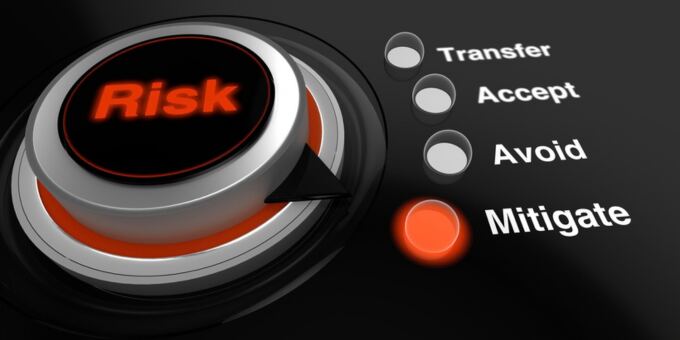
If there’s one thing we’ve learned after nearly fifty years of preparing proposals for highly complex converting and coating machinery, it’s this: A good proposal should mitigate risk for the customer.
What that means is a proposal should provide more than the short- and long-term costs of the machinery. It also needs to include details that provide confidence that the machine can and will manufacture your product(s) at scale, all while meeting your profit margins.
Our proposals may not deliver the low price you were dreaming about, but they will provide you with the critical information you need to know to build, budget and forecast for the future. The goal is to reduce the risk before the purchase order is issued, and minimize and eliminate surprises afterward.
“The last thing we want is for our customers to end up with a million-dollar paperweight,” notes Benjamin Tremblay, a Delta ModTech Market Segment Specialist.
In this post, we’ll dive into some of the typical risks that an equipment proposal should mitigate, and how that translates into long-term performance and better return on investment.
What risks should a quote address?
To integrate risk management into the quoting process, we need to define the specific risks manufacturers look to mitigate. Here are the ones we factor into every proposal:
Technical risk: Will the proposed machinery successfully manufacture the product(s)?
Process risk: Will the manufacturing process achieve the required Overall Equipment Efficiency (availability x throughput x quality) needed to be sufficiently profitable?
Financial risk: Will the investment make financial sense when considering the initial purchase price and long-term costs for training, operation, maintenance, and future upgrades?
Contractual risk: Will the terms and conditions be acceptable to both parties?
Implementation risk: Will the machine meet Factory Acceptance Testing (FAT) and Site Acceptance Testing? Will the product made during FAT meet specification?
Future/obsolescence risk: Will the machine support future production needs through upgrades, modular components and ongoing process development? Will support for the machine remain from the supplier?
When we address all of these areas, our quoting process generates more than just a price tag. It becomes a blueprint for the systems we will ultimately construct, outlining not only how a machine functions, but how it fits into your ecosystem.
“We want to get the best solution for now and for the future,” Ben said.
Why Delta asks so many questions
Like most companies, Delta’s quoting process starts with understanding the needs of the customer and the proposed project. We look at the project in broad strokes, assessing the pain point(s), current capabilities, budget and timeline. And we ask questions. A lot of questions.
The goal here is to not only understand the overall project, but to future-proof and foolproof the project as much as possible. This is where Ben sees a true difference in Delta’s approach: “I think we dig a little deeper than other folks,” he said. “We’re not going to just do a couple of back-and-forth emails and give you a price on a million-dollar machine.”
“When they get the machine, they say, ‘Now I now why you asked all those questions.'”
Ben Tremblay, Market Segment Specialist, Delta Modtech
Ben knows that this approach is not a common practice in the industry. Because he worked for a Delta customer before joining our team, he understands that customers may feel a little overwhelmed by our process: “But when they get the machine, they say, ‘Now I know why you asked all those questions.’”
To be clear, the length of Delta’s discovery phase will depend on the novelty and complexity of the project. If we’ve already delivered solutions on similar projects, our nearly five decades of experience helps us deliver a proposal faster. “We focus on memorializing those learnings and applying them to new projects and new customers,” Ben explains.
Defining success before the quote is submitted
Once Delta has a solid understanding of the customer’s user requirement specifications (or general specifications); throughput and OEE requirements; and the terms and conditions of the engagement, our application engineers get to work. They put together a concept drawing as a starting point for the project.
“The concept drawings are a good first step, but they don’t tell you the nuances of converting a nonwoven, stretchable film, or how the gear ratios should be adjusted to reduce waste,” Ben said.
This is where Delta’s focus on “doing Process Development Once” comes into play. While the drawing establishes the proposed architecture, Delta’s process expertise determines whether the machine can actually manufacture the product successfully. (Read our post on how this helps you avoid repeating process development costs.)
Factory Acceptance Testing requirements are established during this stage. By defining those requirements before the machine is built, both Delta and the customer understand how successful performance will ultimately be measured. The actual FAT will occur after the machine is built and before it is commissioned in the customer’s facility.
Providing this level of diligence takes time. If the new opportunity is familiar to us, we can fast-track the quote and have it to a customer in three to four weeks. Other projects may require more in-depth exploration and proof-of-principle work.
“We work with companies of all different sizes, and sometimes a contract is very simple,” Ben said. “Other times it is not.”
Final review: Does a Delta proposal help you avoid the million-dollar paperweight?
We’ve taken you through Delta’s quoting process, which ends with a formal proposal, but let’s revisit it in the context of the potential risks we highlighted earlier in the article. Whether you’re looking to us or another supplier partner for a proposal, consider answers like the ones below as means to assess risk:
Technical risk: We will draw upon experience with similar applications and, when necessary, complete proof-of-principle work to determine whether the proposed system can successfully manufacture the product. Factory Acceptance Testing requirements establish how successful performance will ultimately be measured.
Process risk: We use our Process Development Once approach to determine how the manufacturing process can achieve throughput, quality and OEE requirements while accounting for future production needs.
Financial risk: We look beyond the initial purchase price to consider factors that affect the total cost of ownership, including training, operating and maintenance, support, future process development and equipment upgrades.
Contractual risk: We address terms and conditions early in the quoting process so both parties understand the requirements of the engagement.
Implementation risk: We conduct FAT to determine whether the completed machine performs according to the agreed-upon requirements before it leaves Delta, helping prepare both the equipment and customer team for on-site commissioning.
Future/obsolescence risk: We consider not only what the machine needs to accomplish today, but how modular, backward-compatible components and future process development can help the equipment adapt as products and business requirements change.
Your own risk assessment may include other factors, and by all means, make sure those are known. Leave no risk mitigation stone unturned. The stakes are too high, both for you and your machine supplier partner, to do otherwise.